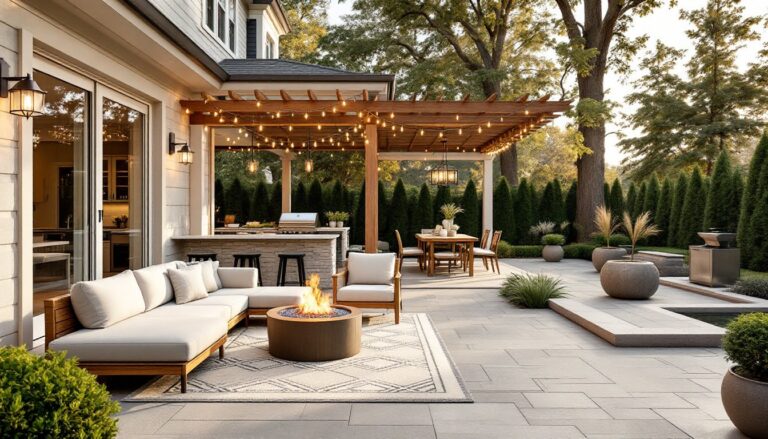
Low decks, those that sit within 12 inches of the ground, offer a practical, budget-friendly way to expand outdoor living space without the structural complexity of elevated platforms. They’re often easier to permit (or exempt entirely in many jurisdictions), require simpler framing, and integrate seamlessly with backyards that already have level or gently sloping terrain. Whether it’s a cozy corner off the back door or a multi-level patio replacement, a ground-level deck delivers function without the need for railings, deep footings, or engineered beams. For DIYers ready to tackle a weekend build or homeowners planning their first major project, low decks strike the sweet spot between ambition and accessibility.
Table of Contents
ToggleKey Takeaways
- Low deck ideas offer a cost-effective and permitting-friendly way to expand outdoor living space, often requiring no permits for structures under 200 square feet in many jurisdictions.
- Pressure-treated lumber rated for ground contact is essential for durability in low decks where framing sits close to soil, while composite decking provides low-maintenance alternatives at a higher upfront cost.
- Proper drainage and ventilation—including 6 inches of clearance beneath joists and gravel pads instead of deep footings—prevent rot and extend the lifespan of ground-level decks.
- Multi-level low deck designs can create distinct zones and eliminate the need for grading on sloped yards while remaining under typical railing height requirements.
- Strategic furniture placement, outdoor lighting, and integrated planters transform low decks into functional outdoor rooms that blend seamlessly with landscaping and existing yard features.
Why Choose a Low Deck for Your Outdoor Space
Cost and simplicity drive most low deck projects. Because the joists sit close to grade, many designs use concrete pier blocks or gravel pads instead of deep frost footings, cutting both material and labor costs. In regions with shallow frost lines or stable soil, this can save hundreds of dollars and several days of digging.
Permitting is often simpler, or nonexistent. Most building codes treat decks under a certain height (commonly 30 inches above grade) as non-structural additions that don’t require railings or inspections. Always check local ordinances, but in many jurisdictions, a low deck under 200 square feet won’t trigger a permit. That means faster project timelines and no inspection delays.
Accessibility matters. A low deck eliminates the step-down barrier, making it easier for kids, elderly family members, and anyone with mobility concerns to move between indoor and outdoor spaces. It also pairs well with backyards that open directly onto patios, creating a continuous flow without abrupt elevation changes.
Finally, visual integration works in your favor. Low decks blend into landscaping rather than dominating it. They’re ideal for small yards where a tall structure would feel imposing or block sightlines to garden beds, fire pits, or play areas.
Best Materials for Building a Low-Profile Deck
Material choice affects durability, maintenance, and budget. For a low deck where joists and framing sit inches from soil and moisture, rot resistance is non-negotiable.
Pressure-treated lumber remains the workhorse for framing and decking boards. Look for ground-contact-rated PT (0.40 PCF retention or higher) for any joists, beams, or posts that contact soil or concrete. For decking, 5/4×6 boards (actual dimensions 1″×5.5″) are standard. Expect coverage of about 18 linear feet per 100 square feet with 1/8-inch gaps between boards. PT costs roughly $2–$4 per linear foot depending on regional pricing.
Cedar and redwood offer natural rot resistance and a cleaner look, but cost climbs to $5–$8 per linear foot. Both require annual sealing to maintain color and prevent splitting. They’re best reserved for decking surfaces: use PT for hidden framing to save money.
Composite Decking vs. Natural Wood
Composite boards (polyethylene and wood fiber blends) eliminate rot, splintering, and annual staining. Brands like Trex, TimberTech, and Azek dominate the market, with costs ranging $6–$12 per linear foot. Composites work well for low decks because they resist moisture wicking from soil proximity better than untreated wood.
Downsides? Composite expands and contracts more than wood, so spacing and fastener choice matter. Use hidden fastener systems for cleaner lines and follow manufacturer specs for gap spacing (typically 1/8″ to 1/4″). Also, composites can get hot underfoot in full sun, something to consider if the deck will see barefoot traffic.
Natural wood costs less upfront and feels warmer underfoot, but demands regular maintenance. For a low deck where airflow beneath the surface is limited, untreated softwoods like pine or fir will rot within five years. Stick with PT, cedar, or composite unless you’re prepared to replace boards frequently.
For DIYers hunting project plans, sites like Fix This Build That offer step-by-step guides that help compare material performance in real-world builds.
Creative Low Deck Design Ideas to Maximize Your Yard
Wraparound low decks extend from a back door along two or three sides of the house, creating distinct zones, dining near the kitchen, lounge seating off a bedroom, and a step-down to the garden. This layout works especially well on ranch-style homes with multiple exterior doors.
Floating island decks sit away from the house entirely, anchoring a fire pit, hot tub, or pergola in the middle of the yard. Use 4×4 PT posts on pier blocks as the foundation, then run doubled 2×6 joists on 16-inch centers. Because there’s no ledger board attachment to the house, flashing and rot concerns around siding disappear.
Integrated planter boxes built into the deck perimeter add vertical greenery without requiring separate hardscaping. Frame boxes with the same 2×6 or 2×8 boards used for fascia, line with landscape fabric, and fill with soil. Just ensure drainage holes to prevent water pooling against the deck frame.
Cutouts for existing trees let you preserve mature landscaping instead of clear-cutting for a slab. Leave at least 2–3 inches of clearance around the trunk to allow for growth. Use flexible rubber edging or composite trim that can be adjusted as the tree expands.
Multi-Level Low Deck Configurations
Even on flat ground, stepped platforms add visual interest and define spaces. A 4-inch drop from a main dining area to a sunken lounge creates separation without walls. Frame each level independently, using pier blocks staggered by height to create the offset.
For yards with gentle slopes, a multi-level low deck can eliminate the need for grading. Build the upper section at grade near the house, then step down in 6–8 inch increments following the natural contour. Each level acts as a landing, and the overall height stays under 30 inches, no railings required in most codes.
DIYers looking for free building plans can find detailed step-by-step deck projects that include cut lists and material breakdowns for multi-level configurations.
Essential Planning Tips Before Building Your Low Deck
Check codes and setbacks first. Even if a permit isn’t required, zoning rules may dictate how close a deck can sit to property lines, septic systems, or utility easements. Call 811 (or your regional equivalent) to mark underground lines before digging any footings.
Grade and drainage can’t be skipped. A low deck needs 6 inches minimum clearance between soil and the bottom of joists to allow airflow and prevent rot. If the yard slopes toward the house, regrade or add a French drain to divert water away from the deck footprint. Standing water beneath the frame will destroy even PT lumber within a few seasons.
Foundation options depend on soil type and frost depth. In frost-free zones or areas with stable, compacted soil, concrete pier blocks (12″×12″ precast pads) work fine. Set them on 4–6 inches of compacted gravel for drainage. In freeze-thaw climates, dig below the frost line (consult local building codes, this ranges from 12″ to 48″ depending on region) and pour concrete footings, or use helical piers that screw into the ground.
Joist spacing and span tables matter. For 2×6 joists, maximum span is typically 9 feet on 16-inch centers (using Southern Pine or Douglas Fir). Go to 12-inch centers if you’re using composite decking, which requires more support. For spans over 9 feet, step up to 2×8 or 2×10 joists. The IRC (International Residential Code) publishes span tables, reference them or consult a structural calculator.
Ventilation is critical. Because low decks trap moisture, use weed barrier fabric beneath the deck to suppress vegetation (which holds moisture and attracts pests), then top with 2–3 inches of gravel to promote drainage. Avoid solid plastic sheeting, which traps condensation.
For builders seeking detailed tutorials on foundation and framing, Instructables hosts dozens of user-submitted low deck builds with photo documentation and material lists.
Decorating and Furnishing Your Ground-Level Deck
Furniture scale matters on a low deck. Oversized sectionals can overwhelm a 10×12 platform. Opt for modular seating that can be rearranged, lightweight resin wicker or aluminum frames work well and won’t trap moisture like wood or fabric cushions.
Outdoor rugs define zones and add color, but choose polypropylene or PET fiber rugs that resist mold and dry quickly. Avoid natural fibers like jute, which rot in damp conditions. Size rugs so they sit entirely within the deck perimeter, overhanging edges collect dirt and moisture.
Lighting extends usability into evenings. Low-voltage LED strip lights (12V systems) can be mounted beneath fascia boards or integrated into stair risers for subtle illumination. Solar post cap lights work for corner accents, though wired fixtures provide brighter, more reliable output. Always use outdoor-rated fixtures and GFCI-protected outlets: if running new electrical, this typically requires a permit and may necessitate a licensed electrician.
Shade structures turn a deck from midday scorcher to all-day retreat. A 10×10 pergola with 4×4 posts and 2×6 rafters is a solid DIY weekend project. For quicker coverage, install a retractable awning or shade sail anchored to the house and opposite posts. Make sure any overhead structure doesn’t push the deck into a higher permitting category, some codes treat covered decks differently.
Planters and greenery soften hard edges. Use self-watering containers to reduce maintenance, and choose plants that tolerate the deck’s sun exposure. Ornamental grasses, lavender, and succulents thrive in full sun: hostas and ferns work for shaded decks. Cluster pots in odd numbers (3 or 5) for a more natural look.
Storage benches double as seating and hide cushions, toys, or garden tools. Build simple boxes from 2×4 frames and 1×6 siding, then add a hinged lid. Line the interior with cedar or composite boards to resist moisture, and drill drainage holes in the bottom.