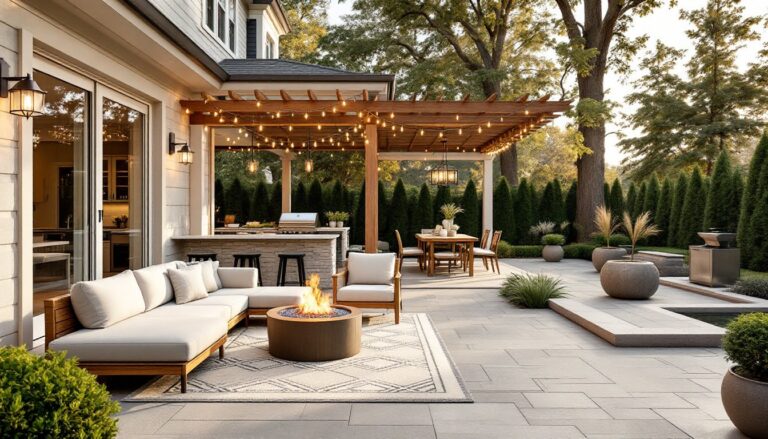
A floating deck offers one of the fastest, most budget-friendly ways to expand usable outdoor space. Unlike traditional decks that require footings, posts, and ledger board attachment to the home, a floating deck sits directly on the ground on simple supports. This means fewer materials, less labor, and, in many jurisdictions, no permit required for low-height structures. For homeowners working with tight budgets, floating decks deliver real value: a clean, level entertaining area that can be built in a weekend with basic carpentry skills. The key is choosing cost-effective materials, keeping the design simple, and doing the work yourself.
Table of Contents
ToggleKey Takeaways
- Low budget floating deck ideas deliver fast, affordable outdoor expansion—complete a 10×12 deck for $500–$900 in materials without needing permits or deep footings.
- Pressure-treated wood at $2–$4 per linear foot beats composite for budgets, while keeping a rectangular footprint and staying under 12 inches high eliminates railings and saves $8–$15 per linear foot.
- DIY construction cuts total project costs by 50–70%, requiring only basic tools like a circular saw, drill, and level—patio blocks on gravel eliminate expensive poured footings.
- Simple material upgrades like semi-transparent stain, solar lights, and freestanding benches add character without complexity, and edge landscaping with mulch or stone improves drainage for $4–$6 per bag.
- Avoid feature creep by building the frame first with joist hangers and face-screwed fasteners, then adding freestanding furniture and upgrades later as budget allows.
What Is a Floating Deck and Why Choose One?
A floating deck is a freestanding platform that rests on surface supports rather than being anchored deep into the ground or attached to a house. Typically built on concrete deck blocks or poured footings just below grade, it “floats” independently.
This design offers several advantages for budget-conscious builders. First, it eliminates the need for deep post holes, concrete mixing, and heavy hardware required for ledger board connections. Second, because floating decks typically sit less than 30 inches above grade, many municipalities don’t require a building permit, though it’s essential to verify local codes before starting.
Floating decks work best on relatively level ground. If the site has more than a few inches of slope, you’ll need to level the support blocks or add shims, which can complicate installation. They’re ideal for patios, garden retreats, hot tub platforms, or backyard seating areas where a permanent foundation isn’t justified.
Budget-Friendly Materials for Your Floating Deck
Material costs make or break a budget deck project. Choosing wisely means balancing upfront expense against maintenance and longevity.
Pressure-Treated Wood vs. Composite Options
Pressure-treated pine remains the most economical decking material in 2026, typically running $2–$4 per linear foot for 5/4×6 boards (actual dimensions: 1″ × 5.5″). It’s widely available, easy to cut with standard tools, and accepts stain or sealant. Plan to apply a water-repellent finish every 2–3 years to prevent warping and UV damage.
For the frame, use pressure-treated 2×6 or 2×8 joists (actual: 1.5″ × 5.5″ or 1.5″ × 7.25″) spaced 16 inches on center for standard deck boards. Perimeter beams should be double 2×6 or single 2×8, depending on span.
Composite decking costs $5–$10 per linear foot but requires nearly zero maintenance. If budget allows, consider a hybrid approach: pressure-treated framing with composite surface boards. This cuts material cost by 40–50% compared to an all-composite build while eliminating the tedious re-staining cycle.
Avoid cedar or redwood unless salvaged or locally milled. Retail pricing often doubles that of treated lumber with minimal performance gain for ground-level applications. For fasteners, use galvanized or coated deck screws, not nails, to resist pullout and corrosion. Budget about $0.60–$1 per square foot for fasteners and hardware.
Simple Design Ideas That Save Money
Complexity costs. Every angle cut, notch, or curved edge adds labor and material waste. Stick with rectangular or square footprints in standard lumber lengths to minimize cuts and scrap.
A 10×10-foot deck uses common 10-foot joists with zero cutting, while a 12×12 layout works well with 12-foot boards. Avoid odd dimensions like 11×13 that force multiple cuts per board.
Keep the deck low, 8 to 12 inches above grade, to skip railings. Most building codes don’t require railings for decks under 30 inches high, saving $8–$15 per linear foot. If the site demands extra height on one side due to slope, consider a stepped design with two platforms rather than adding railings.
Patio block foundations beat poured footings for simplicity. Standard precast concrete deck blocks cost $4–$7 each and require no mixing or curing time. For a 10×10 deck, plan on 9–12 blocks depending on joist span and soil conditions. Set them on tamped gravel (not bare dirt) to prevent settling.
Skip built-in benches and planters during initial construction. These features look great in free DIY furniture plans but add framing complexity. Build the deck first, then add freestanding furniture as budget allows.
DIY Construction Tips to Cut Costs
Labor often equals or exceeds material cost on contractor-built decks. Doing it yourself can cut total project expense by 50–70%, assuming basic tool access and carpentry confidence.
Start with a detailed materials list. Measure twice, buy once. Over-ordering by 10% covers mistakes, but buying 30% extra ties up cash in leftover lumber. Most lumberyards accept returns on unused, uncut boards.
Essential tools include a circular saw, drill/driver, 4-foot level, tape measure, and framing square. A miter saw delivers cleaner cuts on deck boards but isn’t mandatory, a circular saw with a guide works fine. Rent a post-hole digger only if local code requires buried footings: otherwise, skip it.
Before laying deck blocks, remove sod and grade the area to drain away from any structures. Spread landscape fabric and 2–3 inches of compacted gravel to suppress weeds and stabilize supports. This step matters, uneven settling will rack the frame within a season.
Build the frame on blocks, then fasten joist hangers and blocking before installing deck boards. Joist hangers rated for your lumber size cost about $1.50 each and prevent splitting from toenailing. Use galvanized hangers and the correct hanger nails (1.5″ × 10d), not deck screws, which lack shear strength.
For deck board installation, start with the straightest boards along the most visible edge. Leave 1/8-inch gaps between boards for drainage and expansion. A 16d nail makes a quick, consistent spacer. Many woodworking project plans recommend hidden fastener systems, but face-screwing with two screws per joist saves $200–$400 on a typical deck and holds just as well with proper technique.
Finish cuts should be sealed with extra preservative on pressure-treated lumber to prevent end-grain rot. Keep a small brush and can of cut-end sealer on site.
Creative Finishing Touches on a Tight Budget
A bare deck frame is functional but uninviting. Small, affordable upgrades add character without blowing the budget.
Stain or sealant runs $25–$40 per gallon, covering roughly 200–300 square feet depending on wood porosity. Semi-transparent stains highlight wood grain and cost less than solid-color options. Apply within a few weeks of construction on pressure-treated lumber once the wood dries to 15% moisture content, use a $20 moisture meter to check.
Edge the deck perimeter with decorative stone or mulch to define the space. A 50-pound bag of river rock costs $4–$6 and covers about 5 square feet at 2-inch depth. This hides the gap between deck and ground while improving drainage.
String lights or solar-powered path lights add ambiance for under $50. Avoid built-in low-voltage systems that require transformers and wiring, simple hook-and-hang Edison bulb strings deliver the same effect with zero installation complexity.
Build simple freestanding benches from leftover framing lumber. A basic 2×4 bench with 4×4 legs takes an hour to assemble and costs $15–$25 in materials. Several beginner woodworking projects offer plans that match well with deck aesthetics.
For shade, consider a DIY pergola frame from 2×6 or 2×8 lumber. A simple 8×8 overhead structure costs $150–$250 in materials and mounts to the deck frame without requiring separate footings. Leave the top open or add inexpensive shade cloth ($1–$2 per square foot) for sun control.
Potted plants, outdoor rugs, and second-hand furniture personalize the space. Check local classifieds and yard sales before buying new, quality outdoor furniture depreciates fast, and most homeowners are happy to offload pieces for 25–50% of retail.
Conclusion
Building a low-budget floating deck comes down to smart material choices, simple design, and sweat equity. A well-built 10×12 deck can be completed for $500–$900 in materials, creating a durable outdoor space that adds functional square footage and property appeal. Start with a clear plan, respect the basics of framing and fastening, and resist feature creep. The result is an outdoor platform that performs as well as contractor-built alternatives at a fraction of the cost.